

Wouldn’t it be nice to be able to walk up the stairs without losing your breath? If that is your goal then you are going to want to improve your cardiorespiratory endurance. If you are looking to run a 5K, 10K, half marathon, ironman, or even a full marathon, you need to improve your cardiorespiratory endurance.
What is Cardiorespiratory Endurance?
Cardiorespiratory endurance it the ability to perform aerobic exercises, such as walking, swimming, jogging, or cycling, for a prolonged period of time. Aerobic means that it is done with oxygen, which is the primary system for cardio respiratory endurance. Aerobic respiration relies on oxygen for ATP production, and supports prolonged exercise.
Cardiorespiratory endurance promotes increased energy availability, weight loss, and reduces the risk of cardiovascular disease (number 1 cause of death in the U.S.). Many experts consider it to be the most important component of health-related physical fitness. I find this to be true, because what is the point of looking like Mr. Olympia if you can’t walk up the stairs without sweating.
How is Cardiorespiratory Endurance Measured?
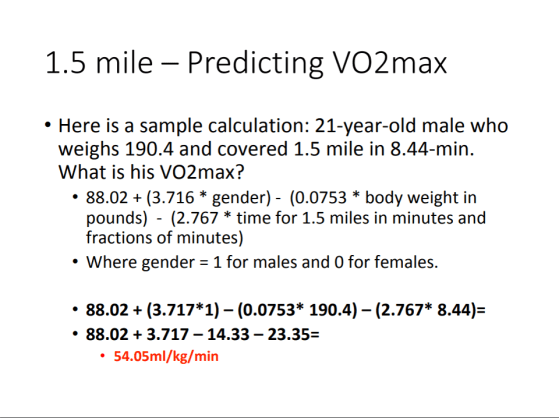
The most valid way to measure cardiorespiratory endurance is with VO2 Max testing. VO2 max is a individuals maximal aerobic capacity or the maximum amount of oxygen the body can take in and use during exercise. It also measures the endurance of the cardiorespiratory system and the exercising skeletal muscles.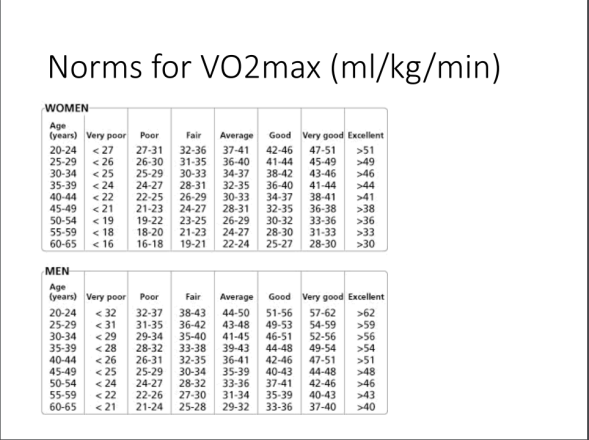
What is the Cardiorespiratory system?
The cardiorespiratory system is actually made of two systems:
- The cardiovascular system (the heart and blood vessels)
- The respiratory system (the lungs and muscles involved in respiration)
Together, these systems deliver oxygen and nutrients throughout the body, and remove waste products from tissue. Exercising challenges the cardiorespiratory system by increasing the demand for oxygen and nutrients in working muscles.
How does the body get energy for cardiorespiratory exercise?
First, why do we need energy? It is the fuel we need for our muscles to work, and it is derived from the breakdown of food. Energy is released from the breakdown of food and creates a compound called ATP (adenosine triphosphate). ATP is made and stored in small amounts in muscle and other cells. The breakdown of ATP releases energy in a form that muscles can use for movement. It is the only compound in the body that can provide this immediate source of energy; therefore, ATP must be available for muscles in order for them to contract.
Aerobic v.s. Anaerobic systems
These are the two systems in muscle cells that produce ATP
Aerobic:
- With oxygen
- The primary system for cardiorespiratory endurance
- Relies on oxygen for ATP production
- Can use fats, proteins, and carbohydrates to produce ATP
- Supports prolonged exercise, with a sift from carbohydrates to fats as the primary energy source
- Most daily activities rely on aerobic ATP production
Anaerobic:
- Without oxygen
- Provides ATP at the beginning of exercise and for short-term high-intensity exercise
- Produced through glycolysis, the process that breaks down carbohydrates
- Can only use carbohydrates as an energy source
Aerobic exercise is good for exercises over long distances, like running a marathon or triathlon. Anaerobic exercise is best for short intense exercise like sprints or wrestling.
Responses to Exercise:
Cardiorespiratory exercise results in an increase of heart rate, stroke volume, breathing rate, and arteries expand.
Adaptations of Exercise:
After doing cardiovascular exercise for a while, there are many adaptations. For instance, your resting heart rate will decrease, which is good. You will see an increase in maximum stroke volume, VO2 max, and the muscles capacity to increase aerobic energy. There will also be improvements in respiratory muscle endurance. Unfortunately, due to the principle of reversibility, the adaptations will be lost if exercise is stopped for an extended period of time.
Health Benefits of Cardiorespiratory endurance:
Cardiorespiratory endurance has many benefits including the following:
- Lower the risk of cardiovascular disease
- Increased longevity
- Reduced risk of type 2 diabetes
- Lower blood pressure
- Increased bone density in weight-bearing bones
- Improved self-esteem and body image
- Easier weight control
- Better sleep
- Increased energy
None of these should come as a surprise, of course exercise no matter what form is going to improve your health. Get off the computer and get active.
How to evaluate cardiorespiratory endurance:
There are four different ways to evaluate your cardiorespiratory endurance, it is important to do whatever one is comfortable for you and that you can complete.
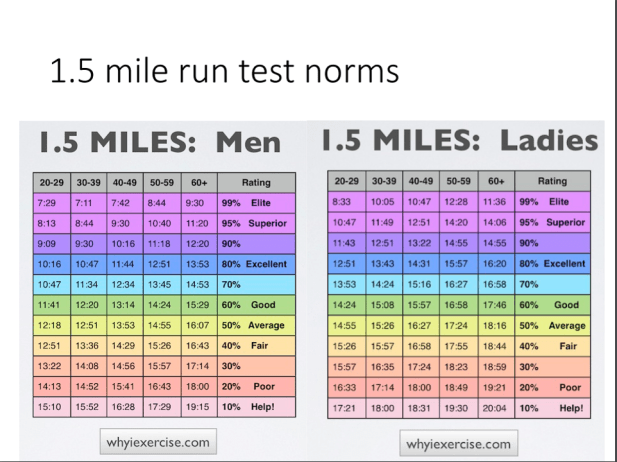
- 1.5-mile run: Not a 15 mile run but a mile and a half, this is the simplest and most accurate tests.
- 1-mile walk test: This is similar to the 1.5 mile run test, but this is better for more sedentary individuals.
- Cycle ergometer test: This test is non-weight bearing, which means that this test is good for those with joint problems
- Step test: Can be performed by anyone of any fitness level, it is how many steps you can complete in a minute.
Designing your aerobic exercise program:
- The first step is to set your goals, both short-term and long term. For example, “I want to run 7 miles per week,” is short-term, and “I want to run a half-marathon in 8 months,” is long-term.
- Always do a warm for 5-10 minutes of a low intensity exercise and stretching
- Use the FITT principle:
- Frequency: 3-5 times a week
- Intensity: 50-85% of maximal heart rate (Learn how to below)
- Time: 20-60 minutes per session
- Type: Do what you enjoy! (jogging, cycling, rowing, etc)
- Never forget to cool down, do some low intensity exercise and stretching to wrap up each session.
Phases:
- Initial conditioning phase
- Lats roughly 2-6 weeks, depending on your initial fitness level
- Starts at a comfortable intensity level
- Increase duration or intensity gradually (not both)
- Be aware of body pains and rest as needed
- Improvement phase
- Ranges from 7-28 weeks
- Progress is more rapid than initial conditioning phase
- Increase duration and frequency first, then start increasing intensity
- Maintenance phase
- Usually reached after 16-28 weeks of training
- Fitness goal has been achieved
- Continue exercising regularly, but there is no need to continue increasing duration, frequency or intensity
- Key factor in maintaining cardiorespiratory fitness is exercise intensity
Calculating Target Heart Rate:
Heart Rate Max: = 206.9 – (.67 x age in years)
Heart Rate Reserve = Heart Rate Max – Resting Heart Rate
Target Heart Rate 50% and 85%
- THR = (.50 x HRR) + 60 RHR
- THR = (.85 x HRR) + 60 RHR
Try to stay in these ranges during your cardiorespiratory exercises.
Training Techniques:
- Endurance training: any type of exercise aimed at improving cardiorespiratory endurance, which is most commonly a continuous activity
- Cross training: alternates multiple training modes. Can help reduce boredom and risks of overuse
- Interval training: Often used by athletes or those of a higher fitness level. It uses repeated sessions of high intensity exercises alternating with low intensity exercises. This type should not be used on a daily basis due to the high demand and stress it puts on the body.
 KRAM LIFE
Leave a comment